:: Biophysical Analysis ::
Chirascan V100 Circular Dichroism Spectrometer (Applied Photophysics) (HOCK 163C) ::
This instrument can be used for analysis of samples in solution to determine secondary structure components, and can be used to monitor thermal stability of samples. Usage requires a 1-time setup fee.
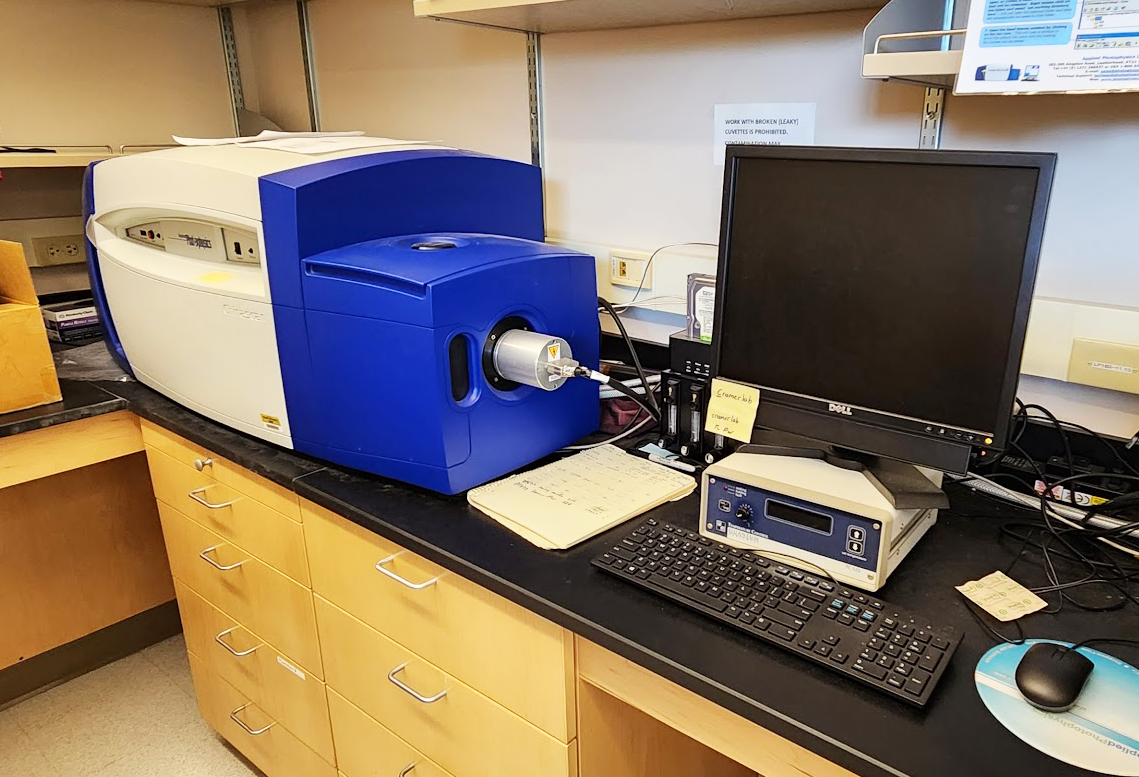
Fee for use (with staff assistance) :: $58.55/hr, plus set up fee ($29.28). Fee for use (trained user, no staff assistance) :: $10.38/hr, plus set up fee ($29.28).
:: Macromolecular Crystallization ::
ALPS 3000 automated plate head sealer (ThermoFisher Scientific) (HOCK 284) ::
This instrument is used to heat seal SDS-format plates for various applications. Seals are specific to the plate type, so be sure to check with staff beforehand to ensure an appropriate seal is installed prior to use. Located in HOCK 284.
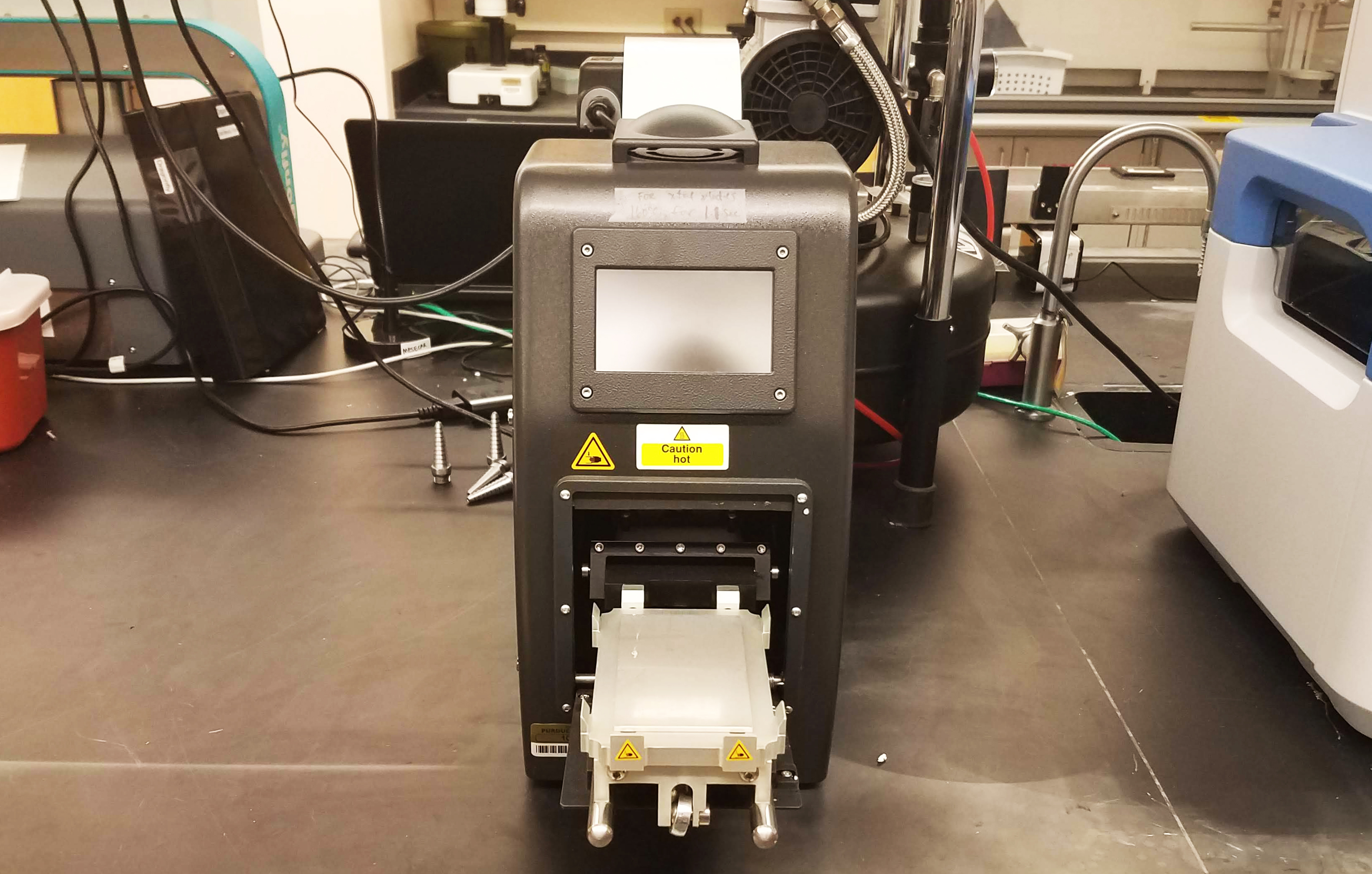
Fee for use (with staff assistance) :: $58.55/hr. Fee for use (trained user, no staff assistance) :: $15.00/hr.
Versette Automated Liquid Handling Instrument (ThermoFisher Scientific) (HOCK 284) ::
The automated pipetting robot can be used for plate copying from 96-well SDS-format deepwell blocks to other blocks or plates. Usage requires user to purchase or use their own instrument tips.
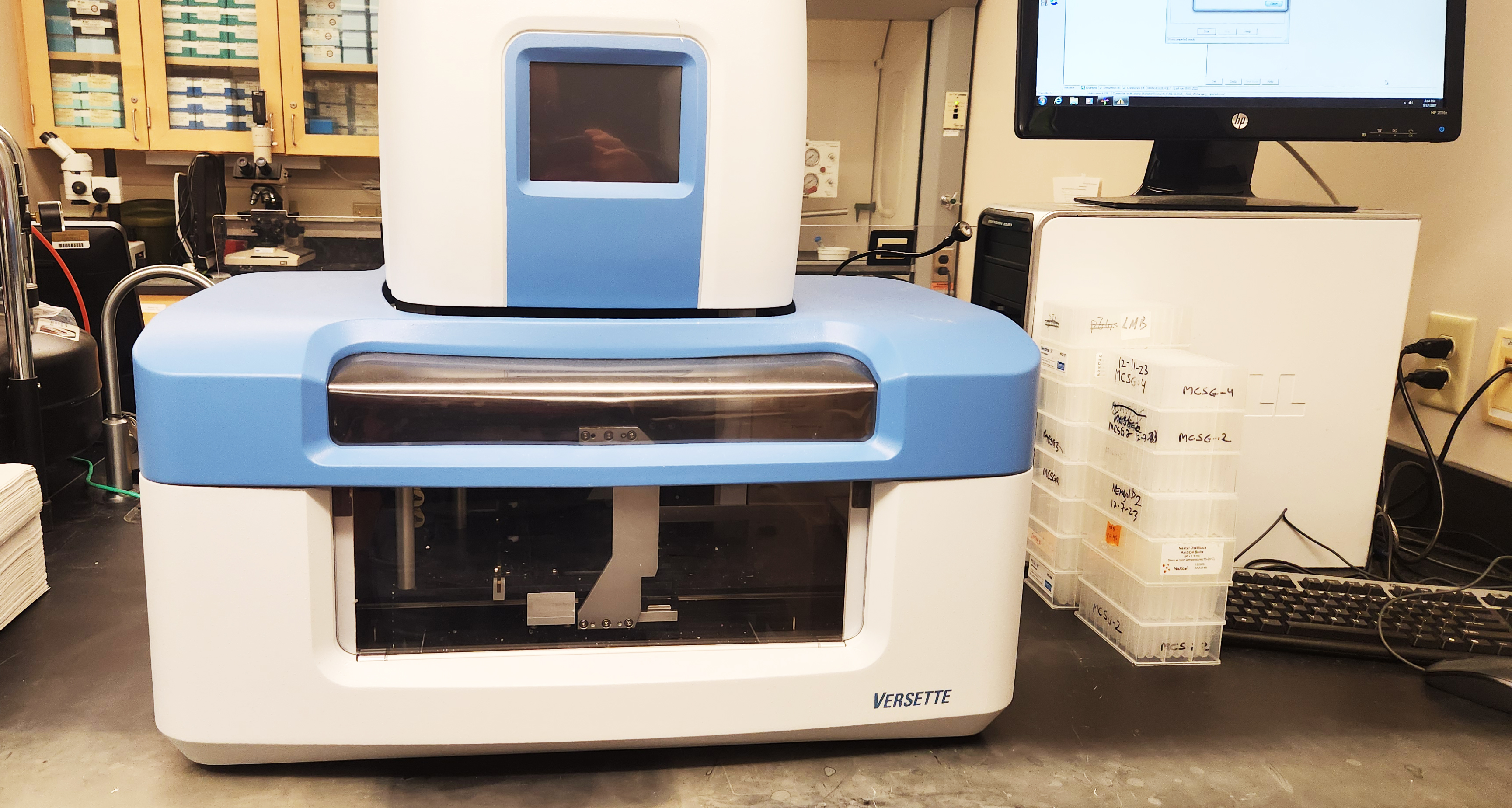
Fee for use (with staff assistance) :: $58.55/hr. Fee for use (trained user, no staff assistance) :: $20.00/hr.
Scorpion Single-channel Automated Pipetting Robot (Art Robbins Instruments) (HOCK 284) ::
This is an automated liquid handling pipetting robot with a single channel for highly automated jobs for rapid, precise, and reproducible pipetting. Users much provide their own tips or purchase from the PCMC.
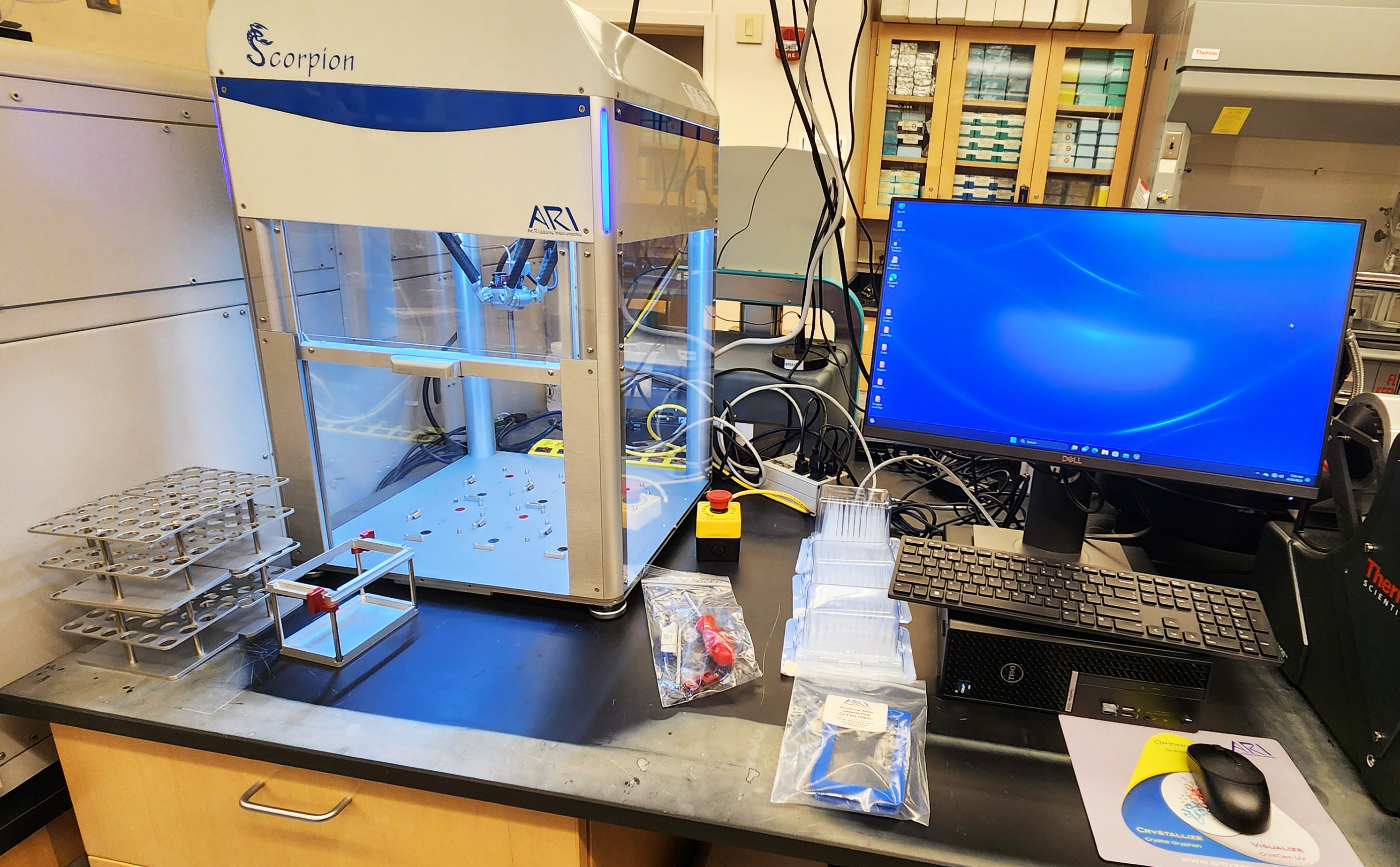
Fee for use (with staff assistance) :: $58.55/hr. Fee for use (trained user, no staff assistance) :: $16.48/hr.
Mosquito-LCP automated crystallization robot (SPT Labtech) (HOCK 307) ::
This robot can be used for setting up sitting drop and hanging drop crystallization experiments using many different plate formats (96-well SDS format) and drop sizes and ratios (lowest pipetting volume 25 nL). This instrument uses disposable pipette tips that are charge separately based on usage in the log book.
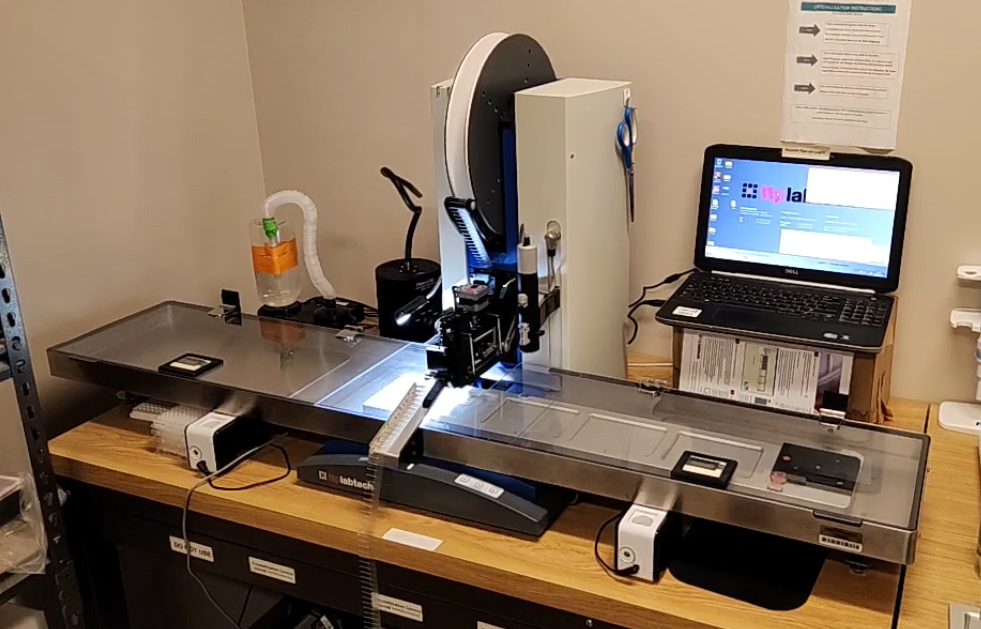
Fee for use (with staff assistance) :: $58.55/hr. Fee for use (trained user, no staff assistance) :: $15.38/hr.
Rock Imager 1 (Formulatrix) (HOCK 284) ::
This robot can be used for automated imaging of 96-well crystallization plates (hanging drop and sitting drop). This robot is house in HOCK 284 and is at ambient room temperature. Plates must be manually barcoded and loaded/unloaded. For automated imaging, please see the Rock Imager 1000 Duo.
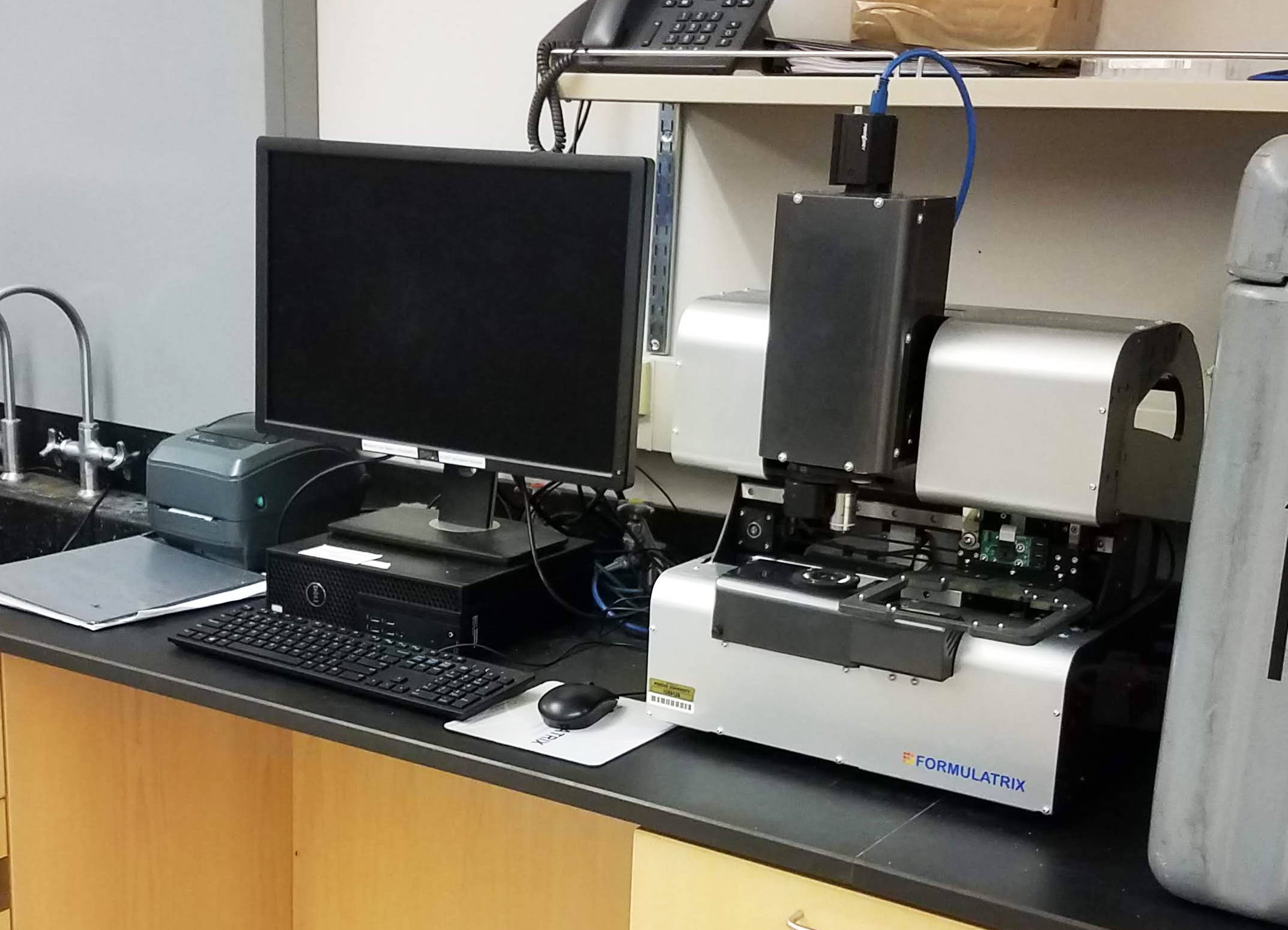
Fee for use (with staff assistance) :: $58.55/hr. Fee for use (trained user, no staff assistance) :: $10.26/hr.
:: X-ray Diffraction ::
MicroMax 007 X-ray Diffractometer (Rigaku/Dectris) (HOCK 289) ::
An X-ray beam ~100 times stronger than our previous systems, with a beam size of ~100 microns and equipped with an Eiger photon counting detector. Optimized for macromolecular crystallography.
Features of the new system include:
- MicroMax-007 HF rotating anode (Rigaku)
- Confocal VariMax-VHF Arc)Sec optics
- Eiger2 R 4M photon counting detector (Dectris)
- Oxford Crosystems cryogenic crystal cooler
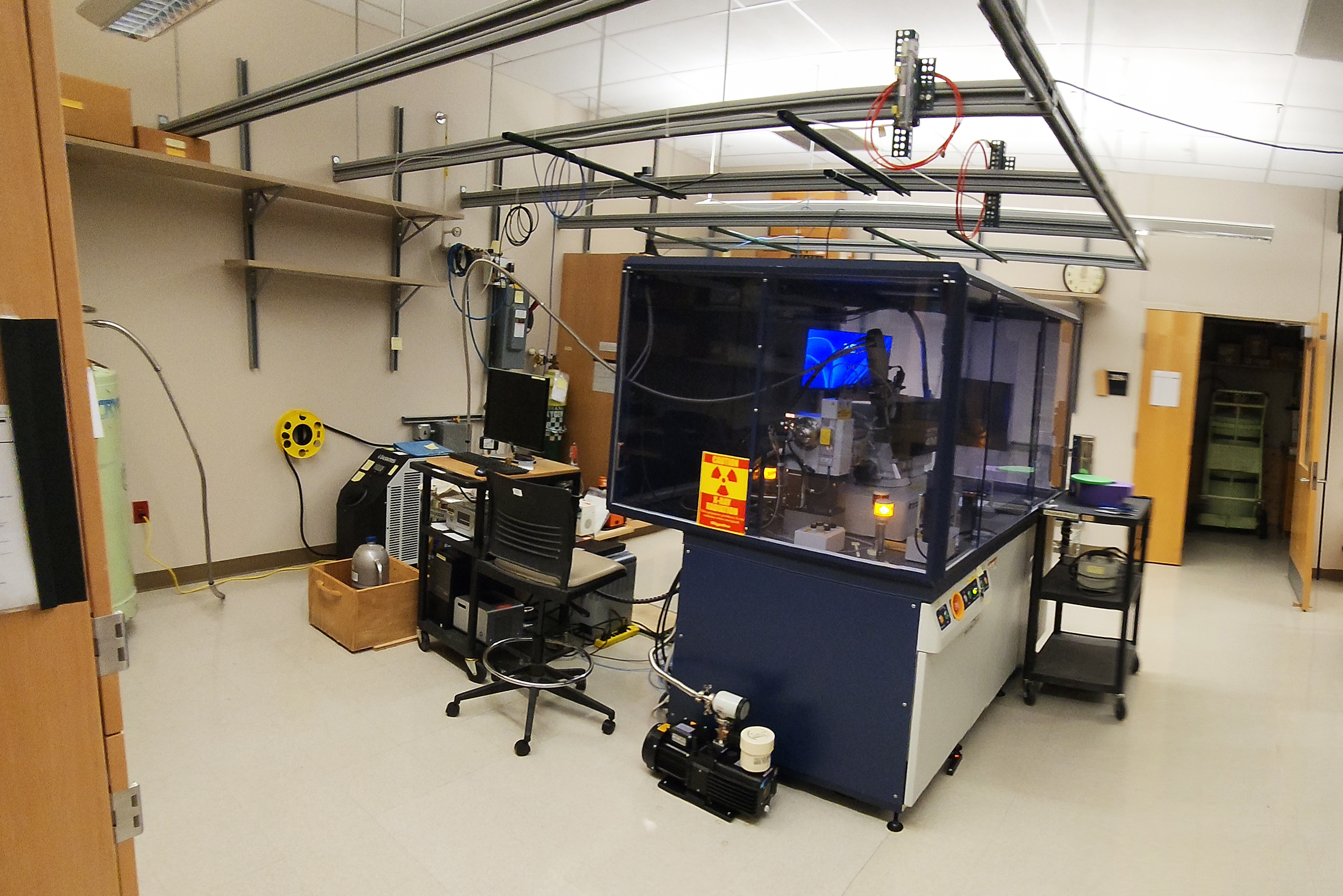
Fee for use (with staff assistance) :: $16.39 equipment use, plus Staff Assist $58.55/hr, plus set up fee ($29.28). Fee for use (trained user, no staff assistance) :: $16.39/hr, plus set up fee ($29.28). Fee for use (PICR member, no staff assistance) :: $2.22/hr, plus set up fee ($29.28).
:: Macromolecular Crystallization ::
Crystallization Tray Singles (HOCK 307) ::
96-well hanging drop crystallization plates including:
MCSG-1, MCSG-2, MCSG-3, MCSG-4, ShotGun SG1, LMB, TOP-96, AmSO4, Index HT, PEGs, PEGs II, PEG/Ion HT, Morpheus HT, MidasPlus HT, Wizard 1+2 HT, Wizard 3+4 HT, MPD, SaltRx HT, ProPLex HT, PACT premier HT, MemGold HT, MemGold 2 HT, MemFacHT, Memstart/Sys
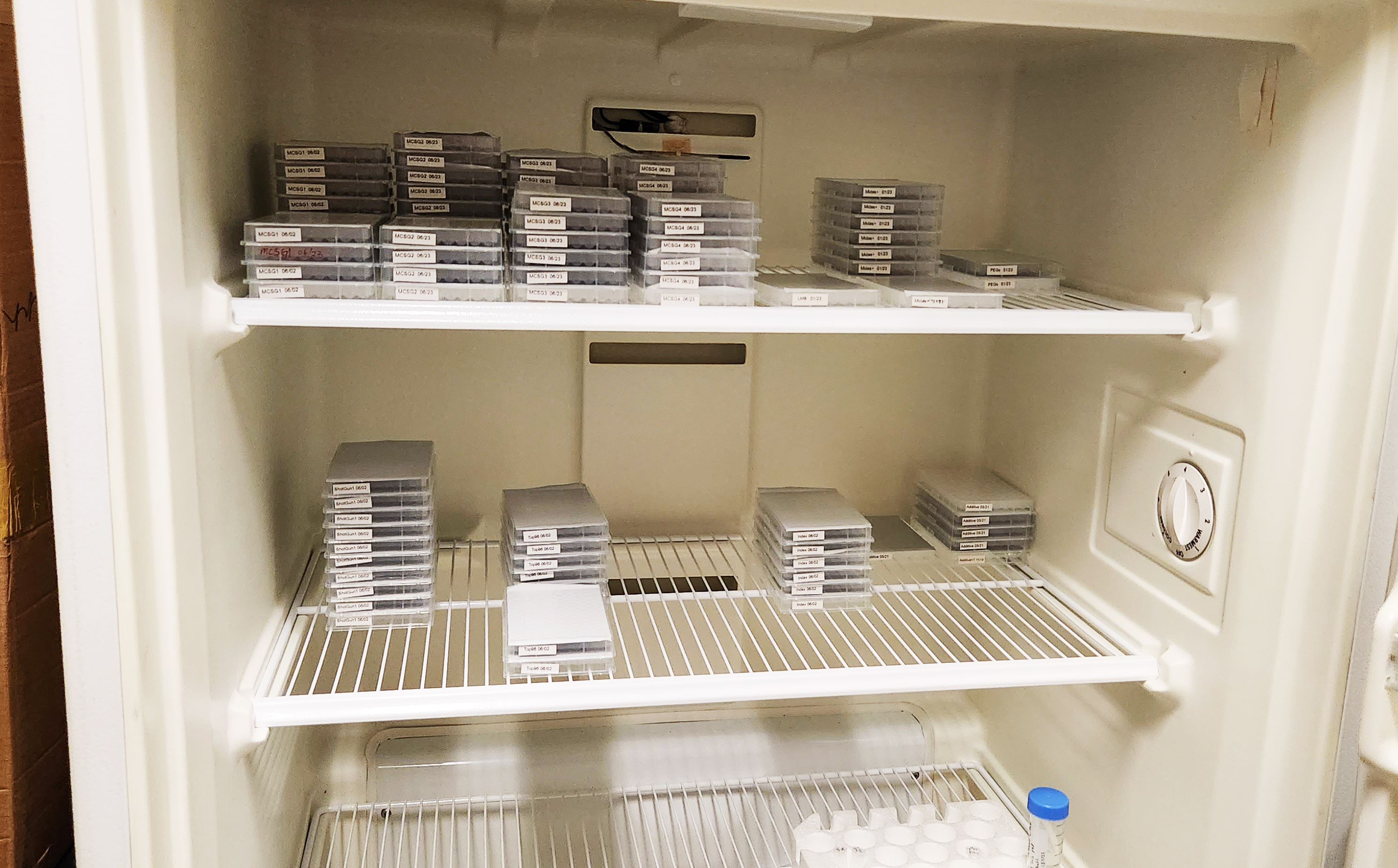
$40/plate; users must provide their own crystallization cover sheets or purchase from the PCMC.
Incubator Room Storage Bin (HOCK 284) ::
Crystallization tray incubator storage bins (cubbies) at 4, 12, and 20 deg C.
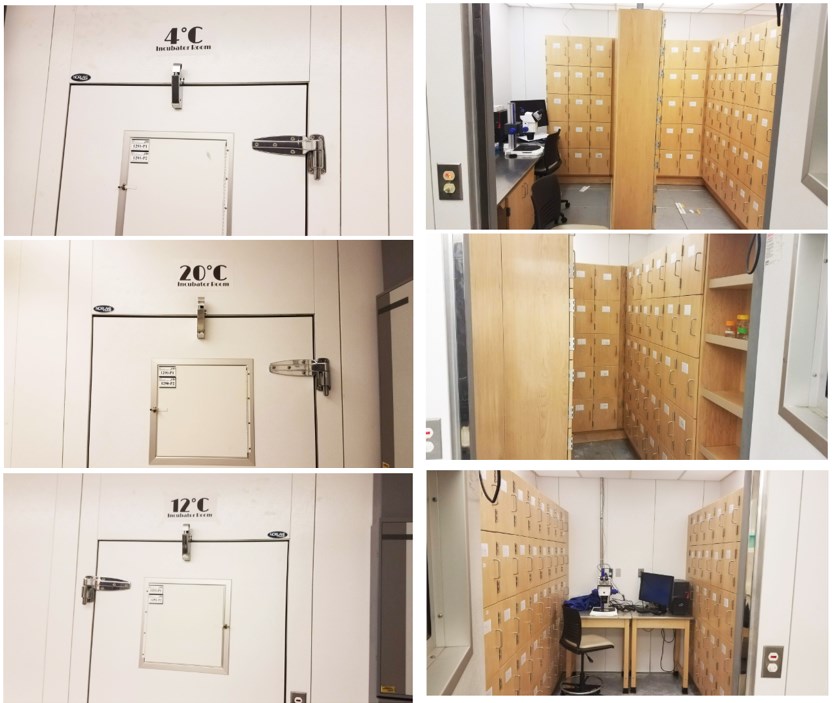
Each storage bin is charged $2.34/mo.
Liquid Nitrogen Fill Station (HOCK 289) ::
Use the log sheet to monitor how much liquid nitrogen you use. This will be billed monthly.
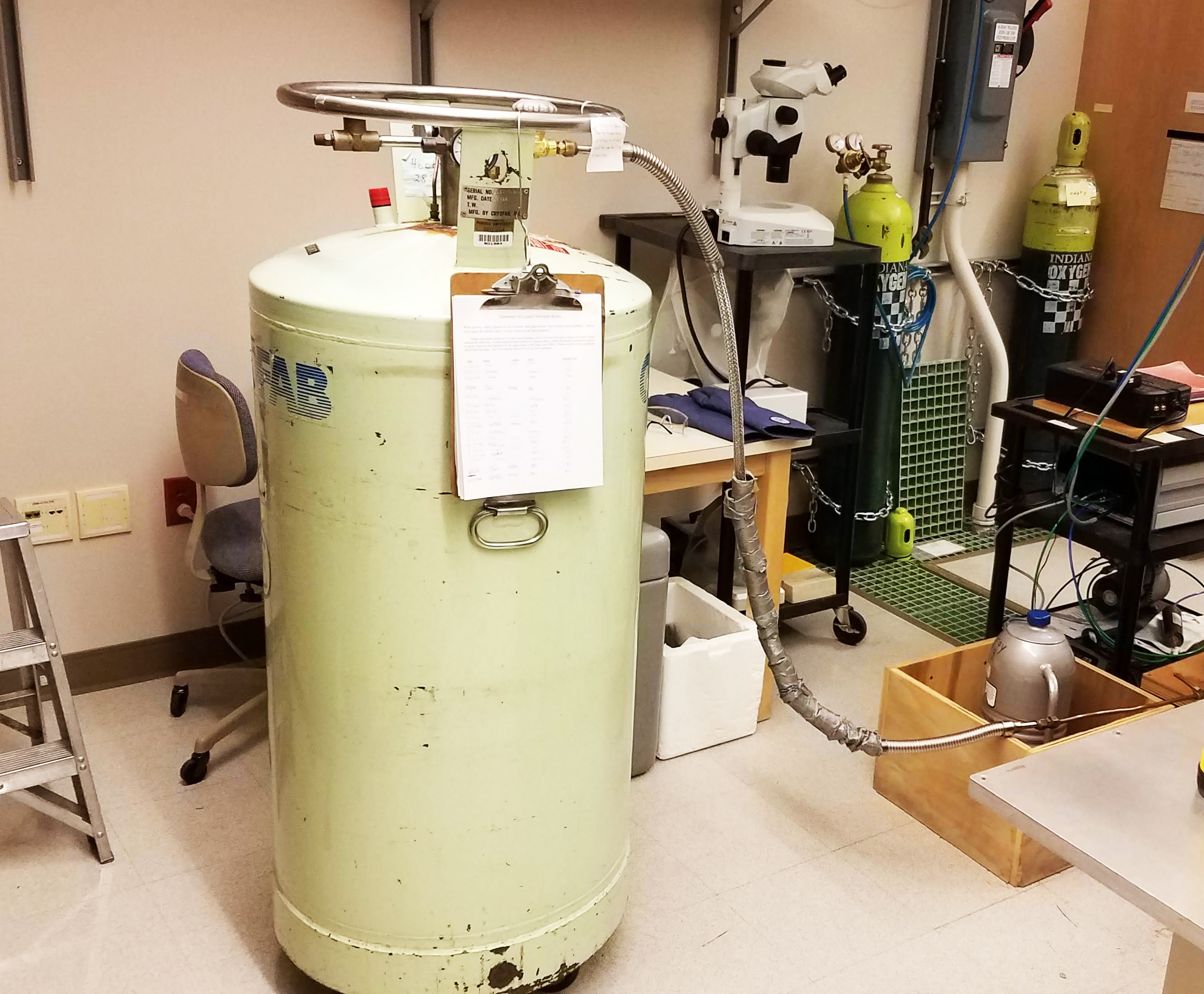
Fee :: $1.06/L.
Rock Imager 1000 Duo (Formulatrix) (HOCK 284) ::
This robot is used for automated imaging and scoring of 96-well crystallization plates (hanging drop and sitting drop) on a set schedule up to 30 days. This robot contains a plate hotel that will hold up to 960 plates for each temperature 4 deg C and 20 deg C. Plates must be manually barcoded and loaded/unloaded into either the 4 deg C or 20 deg C unit. A Rock Maker Web interface is used to access and view the images remotely.
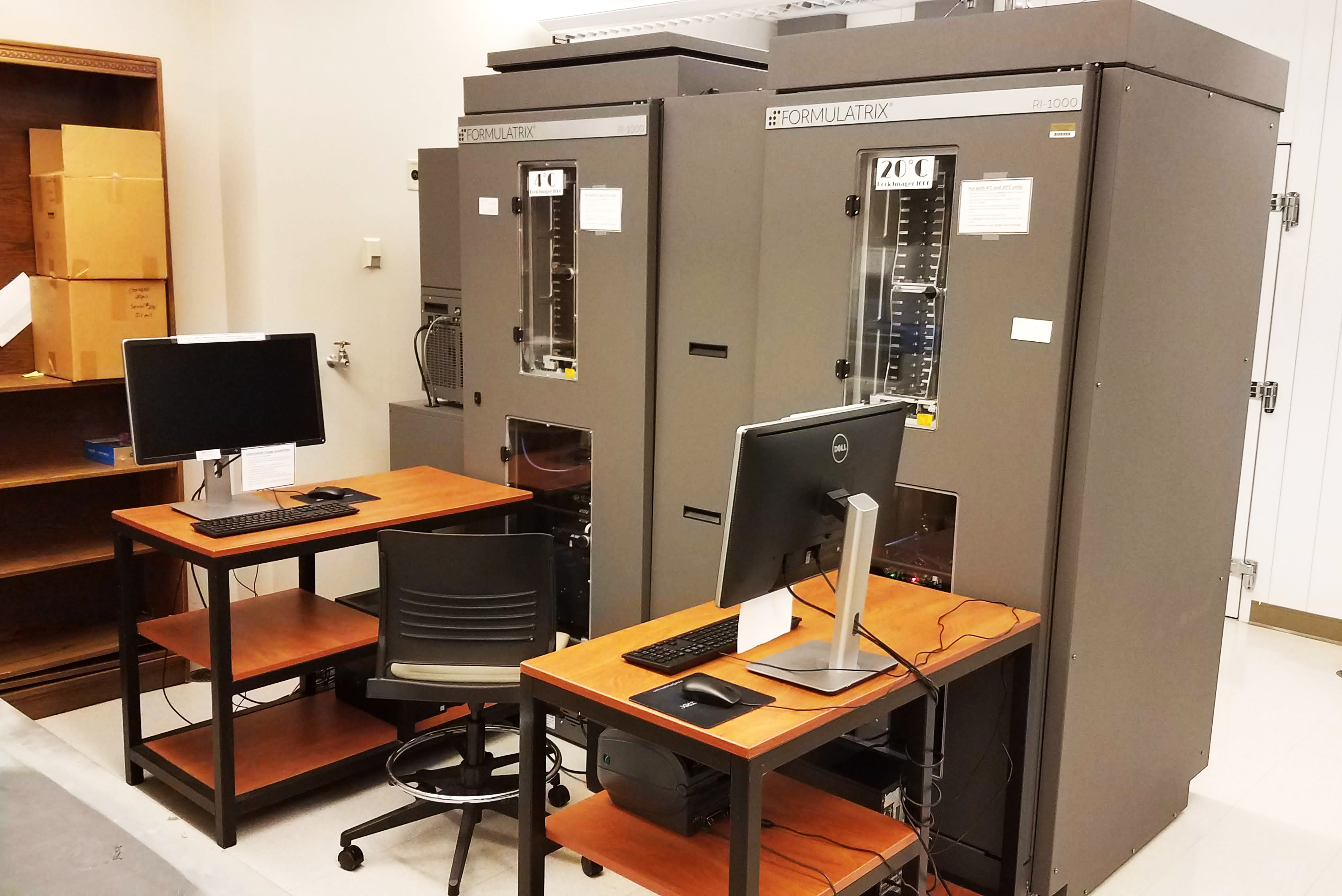
Fee for use :: $5.00/plate for 30 days.
Mosquito-LCP Tips ::
Charge :: $0.10/tip. Please add your tip usage to the logsheet; this will be billed separately each month.
SETUP FEE :: MicroMax 007 X-ray Diffractometer (Rigaku/Dectris) ::
1-Time Setup Fee :: $29.28.
SETUP FEE :: Chirascan V100 Circular Dichroism Spectrometer (Applied Photophysics) ::
1-Time Setup Fee :: $29.28.
Training/Assisted Use Fee ::
Fee for training or other staff assistance; charge per hour. Charged at $58.55/hr.